
Sattva Lumina pricing
Transparent rupee math matters more than render gloss for Sattva Lumina buyers comparing Rajanukunte with inner Yelahanka and Devanahalli alternatives. This article repeats the same headline rate bands shown in the main published price table, then layers other charges the way a bank’s sanction letter would expect. Read it after you shortlist a configuration using the floor plans article and before you negotiate facing premiums tied to the master plan siting.
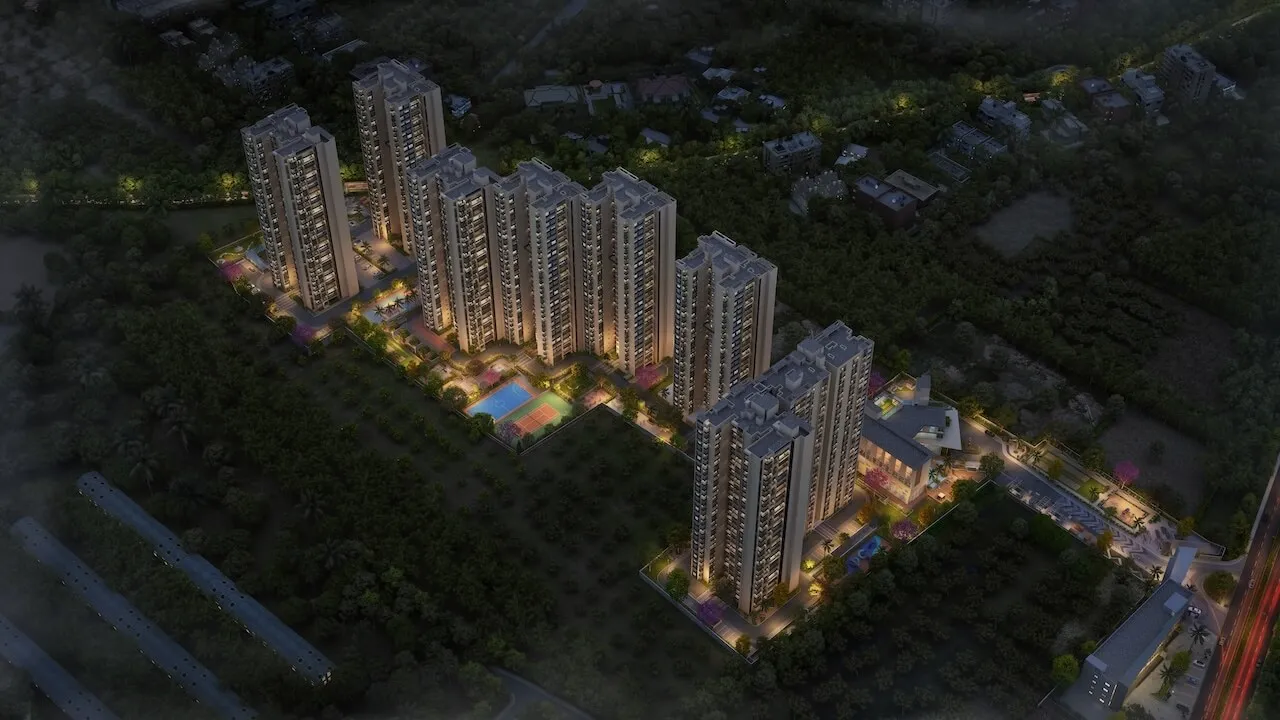
Indicative base price table (plus other charges extra)
Figures below are copied from the public main price table as of this update; they are not a personalised quote. GST, registration, stamp duty, and preferential location charges (PLC) sit outside these headline cells unless sales explicitly says otherwise in writing.
| Unit type | Built-up area | Tentative price (other charges extra) |
|---|---|---|
| Studio | 420–430 sqft | ₹38–42 Lakhs onwards |
| 1 BHK | 650–680 sqft | ₹57–63 Lakhs onwards |
| 2 BHK | 1142 sqft | ₹93 Lakhs onwards |
| 2 BHK | 1185 sqft | ₹99 Lakhs onwards |
| 3 BHK + 2T Regular | 1506 sqft | ₹1.18–1.23 Crore onwards |
| 3 BHK + 3T Grand | 1795 sqft | ₹1.39 Crore onwards |
| 3 BHK + 3T Grand | 1809 sqft | ₹1.44 Crore onwards |
Effective rupee-per-square-foot varies within the same nominal BHK label because balconies, shafts, and wall thicknesses change saleable efficiency. Always ask for the carpet-to-saleable statement before comparing Lumina with a competitor quoting a smaller number but denser cores.
Launch-phase “all-in” billboards sometimes silently assume basic facing and exclude PLC entirely; when you add corner and park-view premiums, headline jumps of six to nine percent are common. Parking tandem slots may discount per bay but annoy daily if your household runs two sedans. Ask whether second-parking waitlists are price-capped or auctioned later—societies have fought ugly battles when post-possession demand spikes.
If you are financing through a salary-account bank, cross-quote one PSU and one private lender; processing speed versus rate trade-offs matter when milestone dates slip. Developer subvention offers, if any, should be reviewed by your lawyer for who bears interest during construction delays.
Other charges you should line-item before booking
- Car parking: covered / tandem slots often billed per bay.
- Clubhouse corpus or amenity membership fee (one-time).
- Preferential location charge (PLC) for floor, facing, corner.
- Power backup load beyond base allocation, if applicable.
- Legal documentation, franking, and assessment charges.
- GST on construction-linked instalments per prevailing law.
- Stamp duty and registration on agreement value (state slabs).
- Mortgage processing fee, MODT, and insurance (lender-specific).
- Interior infrastructure deposits (wardrobe, AC point extras).
- Utility meter deposits and BWSSB / BESCOM connection charges.
- Maintenance advance for first twelve to twenty-four months.
- Generator usage or diesel escalation clauses if separately metered.
Developers sometimes bundle a few items into “all-inclusive” launch packs; read the fine print to see whether those waivers expire at a calendar date or inventory count. Ask whether PLC waivers apply only to non-corner inventory.
Worked all-in example: 2 BHK 1185 sqft at ₹99 lakh base
Illustration only—numbers are rounded and must be replaced with your actual pro forma from sales; stamp duty slabs change with state budgets.
| Line item | Illustrative amount (₹) |
|---|---|
| Base agreement value (₹99.0 L quoted) | 99,00,000 |
| Car park (one bay, illustrative) | 3,50,000 |
| PLC corner + mid-rise (illustrative) | 4,00,000 |
| Clubhouse corpus / amenity (illustrative) | 2,00,000 |
| GST on eligible components (illustrative rate) | 4,50,000 |
| Stamp duty + registration (illustrative slab) | 5,60,000 |
| Legal + loan documentation (illustrative) | 75,000 |
| Indicative all-in before interiors | ≈1,19,35,000 |
The jump from ninety-nine lakh headline to roughly one-nineteen all-in is why bankers stress “fund the gap” between sanctioned loan and actual registry-ready cash. If your liquid buffer cannot absorb stamp duty spikes when state budgets change, pre-model a stress case with +10% on government charges.
Rent yield maths for a two-bedroom at this band in Rajanukunte might land in the high-two to low-three percent gross range against all-in cost depending on furnishing and tenant quality—verify against live listings rather than broker WhatsApp forwards.
Add interior + loose furniture + AC to the all-in table mentally before comparing EMI to rent; many first-time buyers forget that cash outflow until month three post-handover.
Payment plans: construction-linked, 4-3-2-1 slabs, and 20:80 schemes
Construction-linked plans (CLP) tie instalments to RCC milestones certified by lenders; they reduce pre-EMI cash burn versus large front-loaded down payments. The “4-3-2-1” marketing slab refers to decreasing percentages due across four construction phases; it is industry shorthand, not a legal contract by itself—always map each percentage to a dated milestone in your agreement schedule.
Subvention or “20:80” style structures shift interest burden between developer and bank for limited windows; regulators have historically scrutinised them for misallocation of risk. If offered, read who pays pre-EMI during construction, what happens if the developer misses a lender certification, and whether your credit bureau exposure is already live.
Down-payment plans with launch discounts often trade cash today for smaller PLC waivers tomorrow; IRR those trade-offs on a spreadsheet instead of emotionally at the launch desk.
Home loan floating rates in 2026 still swing with RBI cycles; stress-test EMI at +150 basis points above your sanction letter’s first-year teaser if any. Part-prepayment clauses should be read for lock-in periods; some staff-proposed “overdraft” structures carry annual fees that erase apparent flexibility. Insurance bundles (property + life) are often cheaper outside the bank’s packaged quote—compare IRDAI-regulated alternatives before auto-debiting.
NRI buyers should model TDS on property purchase remittances, FEMA documentation for down-payment sources, and double-count currency hedging if rental income will service rupee EMIs later. Repatriation planning after eventual sale belongs in the same conversation as purchase, not five years later at exit.
Peer comparison without naming fake discounts
North Bengaluru launches within a fifteen-minute drive radius compete on both ticket size and commute quality. Use rupee-per-carpet-sqft—not headline BHK labels—when comparing Lumina with slightly older Yelahanka towers that already have formed societies and visible CAM histories. If a peer offers lower base price but tiny carpet efficiency, Lumina may still win on usable room dimensions.
For a land-led contrast in the same developer mindshare belt, reading the TE Yelahanka plot options article clarifies how much of your budget buys private outdoor room versus pooled amenities—two different IRR curves.
Resale liquidity for mid-premium North Bengaluru stacks historically tracks completion quality and school proximity more than launch hype. Buyers who over-leverage for PLC premiums sometimes discover that secondary-market buyers refuse to pay for intangibles like “corner vibe.” Keep screenshots of portal listings for comparable towers when you negotiate your first resale so you anchor data, not anecdotes.
Finally, align your interior budget with reality: modular kitchens, wardrobes, and ACs for a three-bedroom can easily add twenty to thirty-five lakh post-possession if you choose imported finishes. Under-budgeting interiors is how families stall move-in for a year after paying stamp duty.
Need a personalised pro forma?
Send your tower, floor, and unit type; the desk can return an indicative worksheet.